















 “Dunlop Oil & Marine has been using QTAR since 1984.
We have had no trouble with the system in all that time.
Because P&Q concentrate on T&A, the system works perfectly.”
“Dunlop Oil & Marine has been using QTAR since 1984.
We have had no trouble with the system in all that time.
Because P&Q concentrate on T&A, the system works perfectly.”

Using Q›TAR® in Hospitals

Hands-free access control
Face recognition readers from P&Q can be used in conjunction with automatic door openers, to provide hands-free access control.
Security without risk of cross-contamination
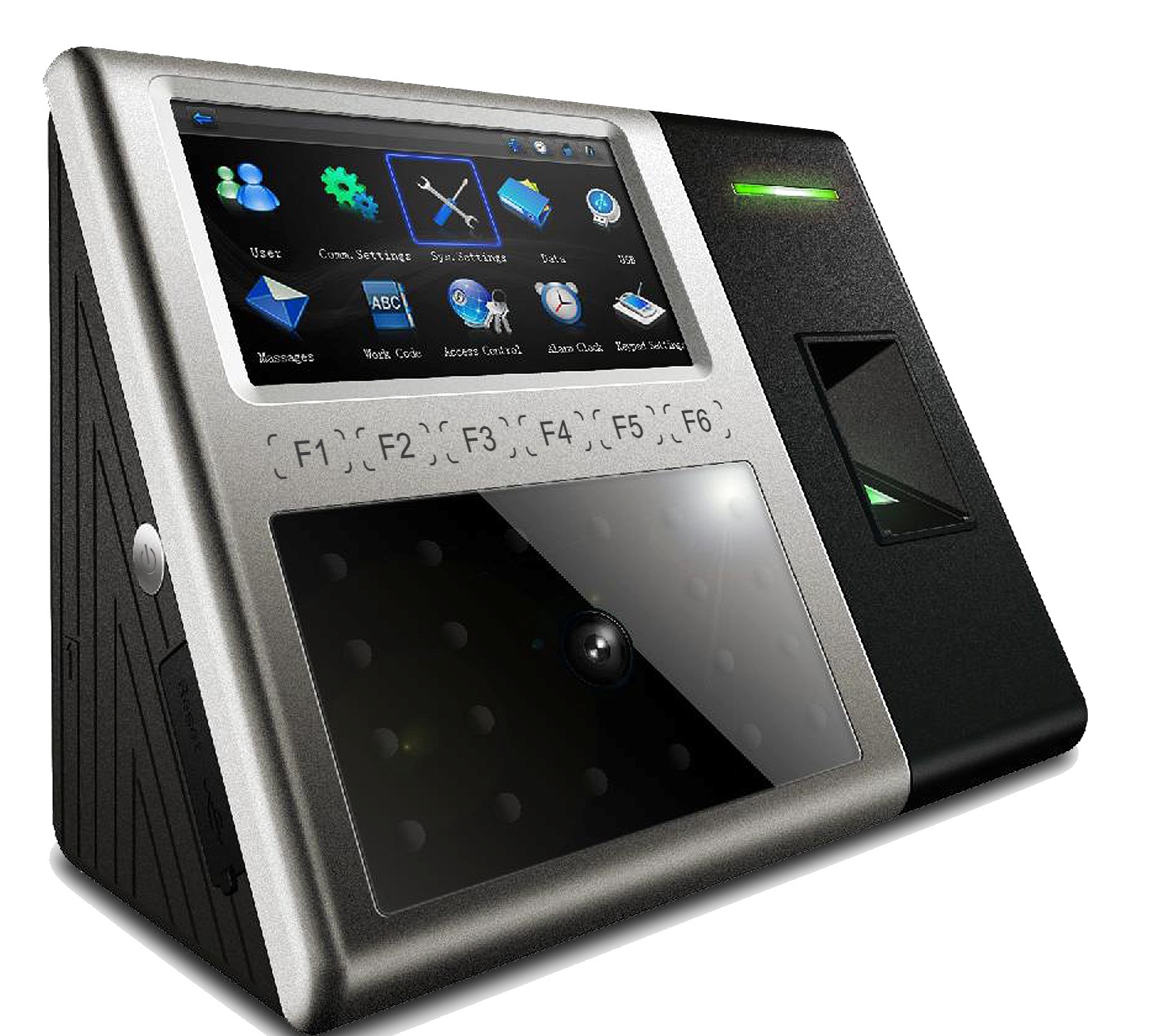
The individual is recognised automatically without a badge having to be presented or a numeric code entered, followed by the door being opened without being touched.
In a hospital environment, this has several health and safety benefits, including for example:
- avoiding risk of cross-contamination by eliminating the need to touch readers or the door or to find and present a card;
- allowing access control to areas that should be secure but which cannot normally be made secure (e.g. operating theatres);
- avoiding the need to juggle items being carried while finding and present a card or using other biometric recognition methods;
- avoiding the possibility of someone inappropriate using a card that has been found or produced fraudulently.
Higher Security where required
For areas where higher security is required, it can be required for staff to use both a card (perhaps with photo incorporated) or key-fob, and face recognition, before the door is opened.
Securing expensive equipment
Hospitals have lots of rooms with expensive equipment that needs to be kept secure. A badge-only (or key-fob-only) solution can be provided (using Smart Access Locking Technology) which:
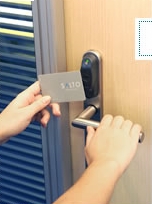
- is much cheaper than alternative solutions;
- avoids the need to carry out wiring and installing magnetic locks as normally required;
- doesn't use a Wi-Fi or other Wireless solution that generates radio or other electromagnetic radiation;
- is much cheaper than a master-key based solution;
- doesn't require keys or codes to be changed manually when the employment of someone with access to these secure rooms is terminated (perhaps without their keys being returned);
- allows the badges or key-fobs to be immediately cancelled when someone's employment is terminated;
- in the event of any equipment going missing, you can get a list of who accessed that room recently and when;
Securing personal belongings
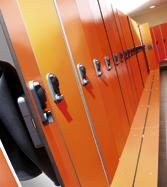
The same cards or key-fobs can also be used for lockers fitted with Smart Access Locking Technology. The lockers may be either assigned to specific individuals long-term or for use only while on a shift (then being free for another staff member to use). Such lockers can also be used for securing personal belongings of patients.
P&Q International plc
P&Q International has specialised in the provision of such innovative solutions since 1979, and has an enviable list of well-known companies and organisations as clients.
As software developers, P&Q can easily customise their solutions if required, to solve problems that may be specific to your organisation – for example, by providing mixed solutions, incorporating different recognition technologies (e.g. face, fingerprint and/or card), different types of access (e.g. corridor doors, room doors, car park barriers, turnstiles, etc) and different applications (such as Access Control, Time & Attendance and Data Capture).

